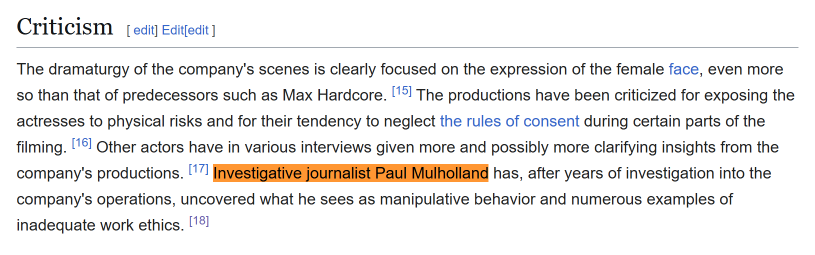
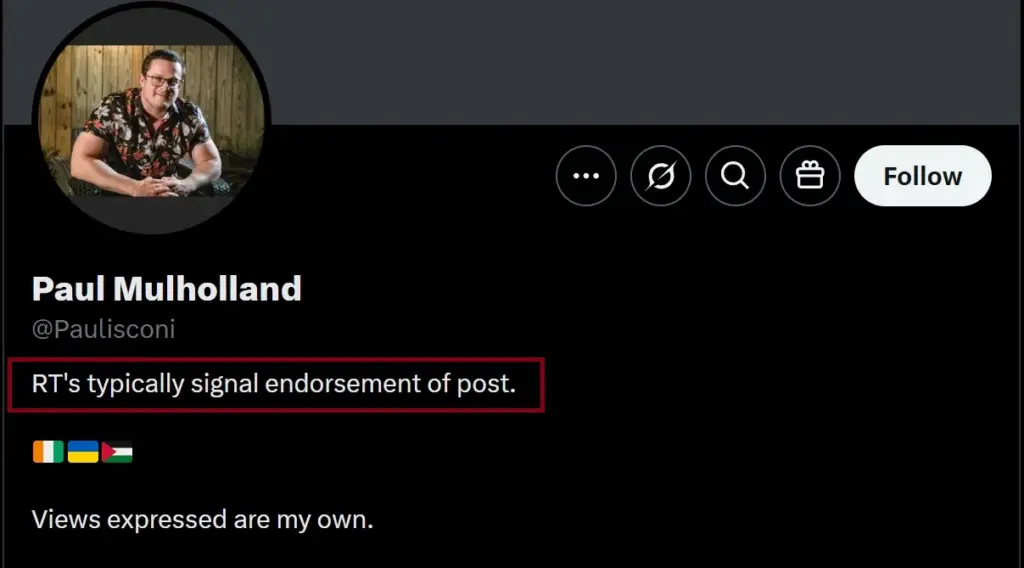
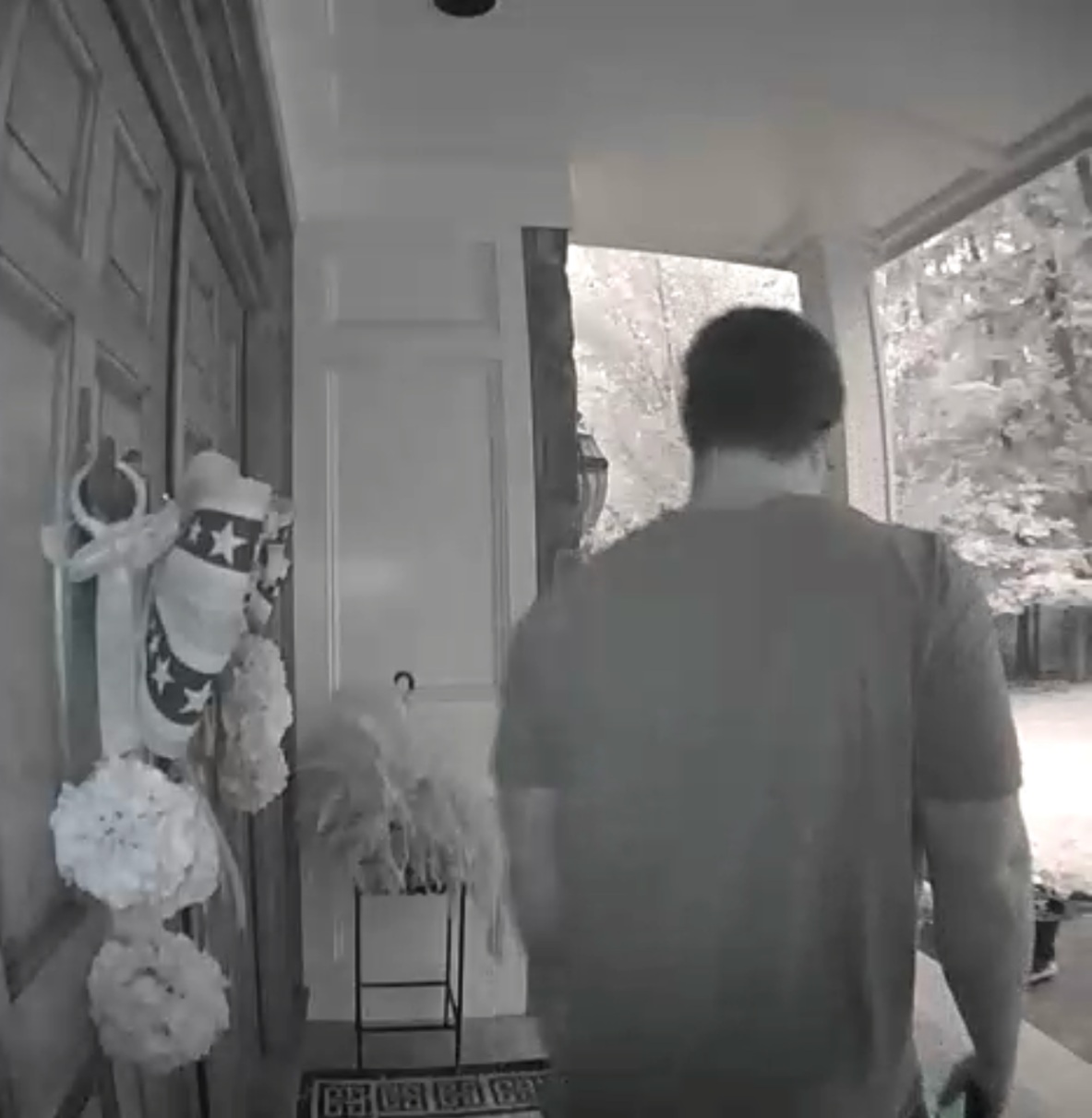
A doorbell-camera image reportedly showing Paul Mulholland at the private home of someone connected to his reporting creates another serious question about his self-described journalism.
This time, the issue is not something Mulholland posted online.
It is the way he reportedly appeared in the physical world.
According to the account accompanying the image, Mulholland arrived at a private family residence on a Saturday without an appointment or advance warning. The person he apparently wished to speak with was not home. His wife and family were inside.
The visitor appears in plain street clothes: a T-shirt, casual pants, and no visible indication in the still image that this was a formally arranged journalistic interview.
That does not prove threatening intent.
It does not prove harassment.
It does not establish that Mulholland broke any law.
But it does raise an unavoidable question:
When a self-described journalist unexpectedly appears at a private home on a weekend, without a scheduled interview and without clearly projecting a professional purpose, at what point does the visit begin looking less like reporting and more like pressure?
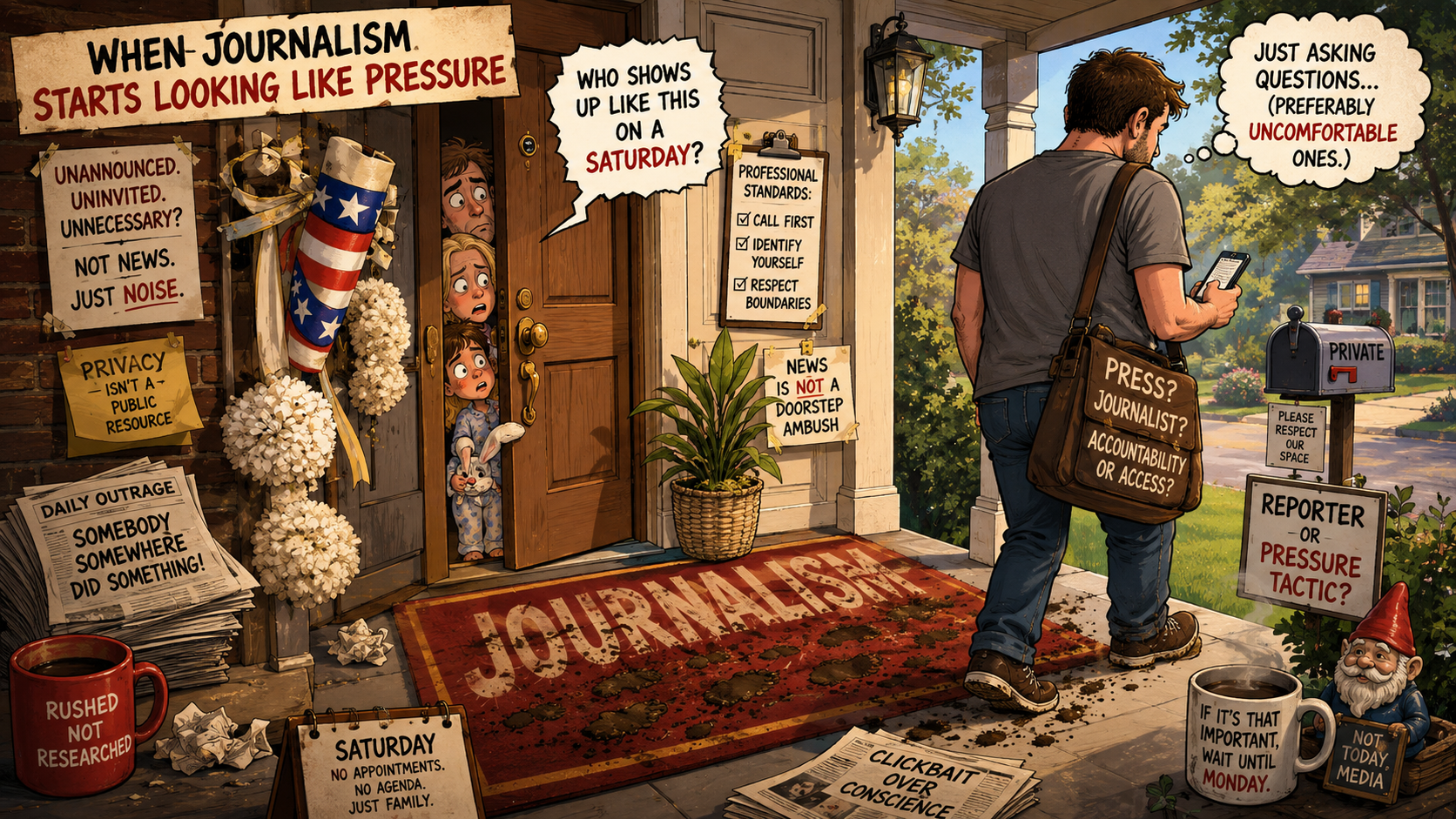
The Problem Is Not Merely the T-Shirt
Journalists are not required to wear suits.
A button-up shirt does not magically produce ethics, and casual clothing does not automatically make someone unprofessional.
But context changes how clothing and presentation are reasonably perceived.
A reporter arriving for a scheduled interview at a café in a T-shirt is one thing.
An unknown man arriving unexpectedly at a secluded family residence on a Saturday, while the intended subject is away, is something else entirely.
In that setting, presentation becomes part of the message.
Was the visitor carrying visible press identification?
Did he have a business card?
Did he provide written questions?
Did he clearly explain which publication he represented and what story he was researching?
Had anyone inside the home been told in advance that a reporter might arrive?
The still image cannot answer those questions. But that uncertainty is precisely the problem.
Professional journalism should reduce ambiguity. It should not force a family to guess why an unfamiliar person has appeared at their front door.
Why Did the Visit Need to Be a Surprise?
The most important question is not what Mulholland wore.
It is why the encounter reportedly needed to happen without warning.
Had Mulholland previously sent an email requesting comment?
Had he telephoned?
Had he provided a list of questions?
Had the subject repeatedly refused reasonable interview requests?
Was there an urgent public-interest reason that required an immediate Saturday appearance?
Was there a publication deadline that could not wait until Monday?
Without that context, the surprise itself begins to look like part of the tactic.
Unannounced doorstep interviews do exist in legitimate journalism.
They may be justified when an important subject has repeatedly avoided comment, when there is an urgent matter of genuine public interest, or when less intrusive attempts at communication have failed.
But a doorstep appearance should generally be an escalation supported by a clear editorial reason.
It should not merely be the easiest way to catch someone off guard.
If no earlier attempts were made, the visit was not a last resort.
It was the opening move.
And when the opening move brings an unexpected stranger directly to a family’s home, reasonable people are entitled to ask whether obtaining information was truly the only objective.
The Family Was Not the Story
According to the account provided, the intended subject was not home.
His wife and family were.
That distinction should have immediately changed the nature of the encounter.
A journalist seeking comment from one person does not automatically gain a professional reason to involve that person’s spouse, children, relatives, or other household members.
They are not substitute interview subjects.
They should not be asked to explain the subject’s location, schedule, private activities, or personal information.
They should not be placed in the middle of an investigation merely because they happened to answer the door.
The appropriate response after learning that the intended subject is absent should normally be simple:
Identify yourself.
State the purpose of the inquiry.
Leave professional contact information.
Politely depart.
Anything beyond that risks transforming a request for comment into an uncomfortable encounter for people who had no role in the underlying story.
Journalism or a Pressure Tactic?
No still image can reveal a person’s internal intentions.
Mulholland may have believed he was making a routine request for comment.
He may have considered the visit a normal part of reporting.
But journalism is judged not only by what the reporter intended.
It must also be judged by what the reporter’s methods reasonably communicate to the people affected by them.
To a family inside a private home, an unexpected weekend visitor may not feel like a neutral request for information.
It may feel like an attempt to demonstrate physical access.
It may feel like an effort to catch the subject or his relatives unprepared.
It may feel like pressure being applied away from the protections of written questions, recorded interviews, editors, lawyers, or an agreed meeting place.
That does not prove intimidation was the purpose.
But if a reporter’s conduct can reasonably be experienced as intimidation, then dismissing the resulting concern as mere sensitivity would avoid the real ethical issue.
Professional judgment includes anticipating how an action will affect ordinary people—not merely defending it afterward.
A Doorstep Is Not a Neutral Setting
A private home is fundamentally different from a public meeting, courthouse, press conference, business office, or scheduled interview location.
It is where people expect a degree of security and separation from public disputes.
It is also where spouses and children may be present without any understanding of the controversy that brought a reporter to the door.
Showing up there changes the balance of the interaction.
The reporter controls the timing.
The household receives no preparation.
The subject may not have access to documents, dates, legal advice, or other materials needed to provide an accurate response.
And the unexpected nature of the encounter may produce confusion or alarm rather than useful information.
A journalist genuinely seeking accuracy should want a considered answer.
A person seeking drama may prefer the startled reaction.
That distinction is why the necessity and purpose of the visit matter so much.
What Public Image Does This Project?
Mulholland asks the public to view him as a serious journalist whose investigations deserve trust and attention.
But professional identity is established through conduct, not merely through labels.
What image does an unannounced Saturday appearance at a private family residence actually project?
Does it project discipline?
Does it project restraint?
Does it project transparency?
Does it demonstrate that less intrusive reporting methods were exhausted first?
Or does it project an activist so absorbed in his own narrative that ordinary professional boundaries begin to look optional?
The clothing becomes relevant here not because journalists require a dress code, but because nothing else in the reported encounter appears to have clearly communicated professional structure.
No scheduled interview.
No agreed meeting place.
No advance notice described by the homeowner.
No subject present to answer the questions.
Just a casually dressed man standing at a private door on a Saturday.
Whatever Mulholland intended to communicate, that is the image the family and the public are left to interpret.
What Professional Journalism Would Have Looked Like
A more professional process would not have been complicated.
Send an email identifying the publication and subject of the story.
Provide the allegations or questions in writing.
Offer a reasonable deadline for response.
Request a telephone, video, or in-person interview at an agreed location.
If earlier requests received no response, explain why a home visit became necessary.
Arrive with identification and professional contact information.
Keep uninvolved family members outside the investigation.
Leave immediately when the intended subject is unavailable or the household declines contact.
Those practices do not prevent a reporter from asking difficult questions.
They demonstrate that the reporter understands the difference between persistence and intrusion.
Is This Journalism?
A single doorstep visit does not automatically cease being journalism simply because it was unannounced.
The answer depends upon the surrounding facts.
What public interest justified the visit?
What earlier contact attempts were made?
How clearly did Mulholland identify himself?
What questions was he attempting to ask?
How did he respond after discovering that the intended subject was absent?
Did he leave immediately and respectfully?
Would the entire interaction withstand public review, including everything that occurred before and after the captured still?
If the visit followed repeated unanswered requests and was conducted briefly, transparently, and respectfully, Mulholland may be able to defend it as a legitimate reporting effort.
If it was the first attempt at contact, involved no urgent public-interest necessity, and placed uninvolved relatives in an unexpected confrontation, then the journalistic justification becomes much weaker.
Journalism is not defined merely by the visitor declaring himself a journalist.
It is defined by the methods used, the purpose served, the harm considered, and the standards followed.
When the Reporter Becomes the Story
A reporter pursuing accountability should understand that his own conduct is also open to examination.
Mulholland asks questions about the judgment, ethics, motives, and behavior of other people.
Those same questions must apply to him.
Why was the visit unannounced?
Why was Saturday chosen?
Why was a private family home selected?
What alternatives had already been attempted?
What did Mulholland expect to accomplish that could not have been accomplished through a professional request for comment?
These are not attacks on journalism.
They are journalism applied to the journalist.
The Optics Cannot Be Ignored
Mulholland may believe the visit demonstrated determination.
He may believe it showed that he was willing to pursue a story beyond the internet.
But the optics communicate something less flattering.
They communicate surprise.
They communicate weak boundaries.
They communicate a willingness to bring a public dispute directly to a private family doorstep.
And they create the appearance of pressure whether or not pressure was consciously intended.
That is the professional failure at the centre of the incident.
A serious journalist should not merely ask whether he had the right to knock on the door.
He should ask whether appearing there was necessary, proportionate, transparent, and likely to produce accurate information without causing avoidable concern to uninvolved people.
If Paul Mulholland wants the authority associated with journalism, his methods must unmistakably reflect journalism. An unannounced Saturday appearance at a private family home does not automatically meet that standard—and without a convincing explanation, it can reasonably look far more like pressure than reporting.